
The buildable envelope sits across four documents
Setbacks, height limits, lot coverage, floor area ratio and overlay conditions rarely live in one place. The ordinance carries the base rule, the map carries the district, an overlay modifies both, and a prior determination on a neighbouring parcel changes how a clause gets read.
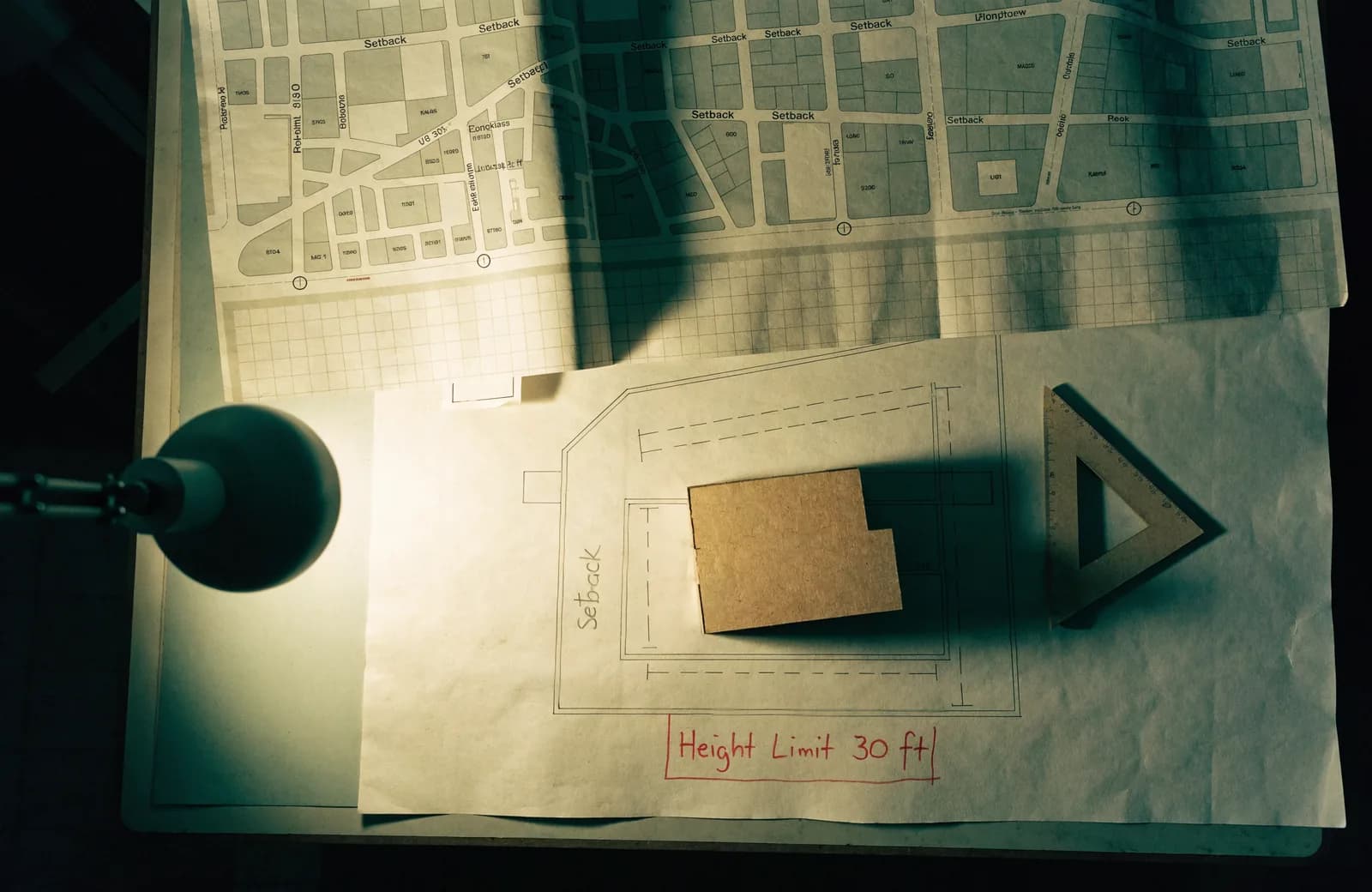
Assembling the envelope is careful reading rather than difficult reasoning. Somebody works through the ordinance, checks the district, applies the overlay and then checks whether any of it has been interpreted differently before.
It takes hours, it happens early when the fee is smallest, and it gets redone whenever the site changes.
A missed overlay condition surfaces late, and by then the massing it invalidates has already been drawn.
Read the ordinance against the parcel
The base district rule, the overlay, and the conditions that attach to the specific parcel get assembled into one envelope statement rather than left across four documents.
Cite every constraint to its clause
Each setback, height and coverage figure reports the section it came from, so a reviewer verifies the constraint at its source.
Name what is unresolved
Where a clause is ambiguous or a determination is needed, the output says so. An ambiguity flagged early costs a phone call, and the same ambiguity found late costs a redesign.
What is a buildable envelope?
The buildable envelope is the three-dimensional volume a zoning ordinance permits on a specific parcel, after setbacks, height limits, lot coverage, floor area ratio and any overlay conditions have been applied. It sets the outer boundary within which a design can be developed.
Why is zoning analysis slow?
The governing rules sit across separate documents. The ordinance carries the base district rule, the zoning map establishes which district applies, an overlay can modify both, and prior determinations can change how a clause is read. Assembling them is careful reading, and it happens early when the fee is smallest.
Does this replace a zoning attorney or a code consultant?
No. The work assembles the constraints and cites each one to its clause. Interpretation, determinations and any legal position stay with the qualified professional advising the project.
How much of your bidding lives in one person's head?
The Standards Gap Test asks 40 questions about your symbol library, your assembly rules, and the conventions nobody wrote down. You answer from memory in 15 minutes, then you count how many answers only one person can give.